Education policy
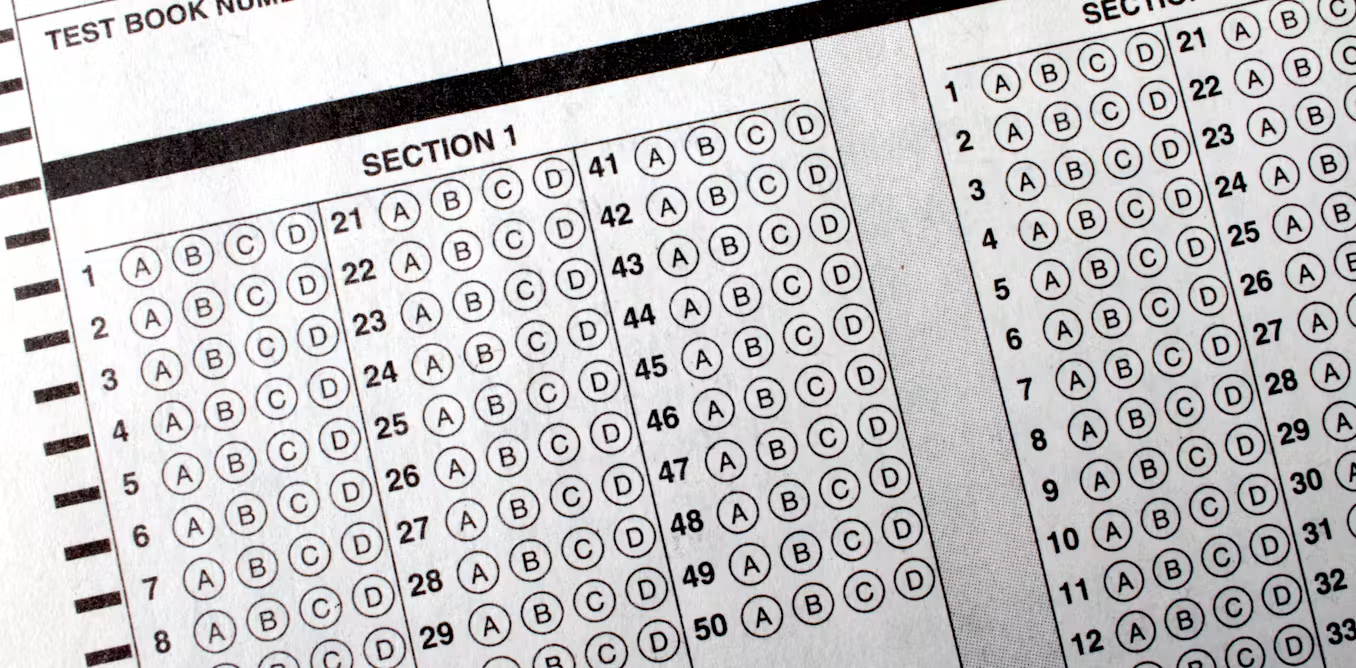
Students take up to 88 standardized tests before high school, but more testing doesn’t improve learning
Students’ scores on standardized tests can affect schools’ ratings, adding to the pressure teachers experience in preparing their students for the assessments.

What civil rights enforcement cuts mean for students with disabilities – fewer staff, closed offices, longer waits
Filing a civil rights complaint with the Office of Civil Rights can be parents’ last stop. Following cuts and restructuring, this federal office is no longer serving that same resource.

Nearly 1 in 4 students are chronically absent from school – kids who feel happy and safe are less likely to miss class
Research on absenteeism often focuses on factors like unreliable transportation, overlooking what schools themselves can do to help kids maintain a steady attendance record.

South Carolina is allowing teachers to give zeros again, but the problem with grading goes deeper
“No-zero” grading policies are becoming more common in US schools. South Carolina is the first state to ban these policies.

Despite the growth of some AI schools like Alpha, research doesn’t show that AI tutors are better than human teachers
Instead of schools trying to replace teachers with AI, teachers could use AI to become better educators.

Black teachers improve outcomes for all students, but the profession remains largely white
Many Black teachers were pushed out of classrooms from the 1950s through ‘70s. Despite new recruitment programs, the teacher workforce remains mostly white.

New reading textbooks, same problem: Why children’s reading scores in the US aren’t rising
There are many literacy textbooks available but no clear way to determine which ones are the best – and most likely to turn kids into better readers.

When it comes to developing policies on AI in K‑12, schools are largely on their own
The current landscape of AI use in K-12 schools is highly varied because there’s little specific policy guidance from the state and federal levels.